

Data strategy
Identify the decisions your data must support, assess source limitations, and establish a prioritized delivery roadmap.
Build a dependable foundation for reporting, operations, and AI. AsonTech Solutions helps your team connect data sources, improve quality, and deliver information people can use with confidence.
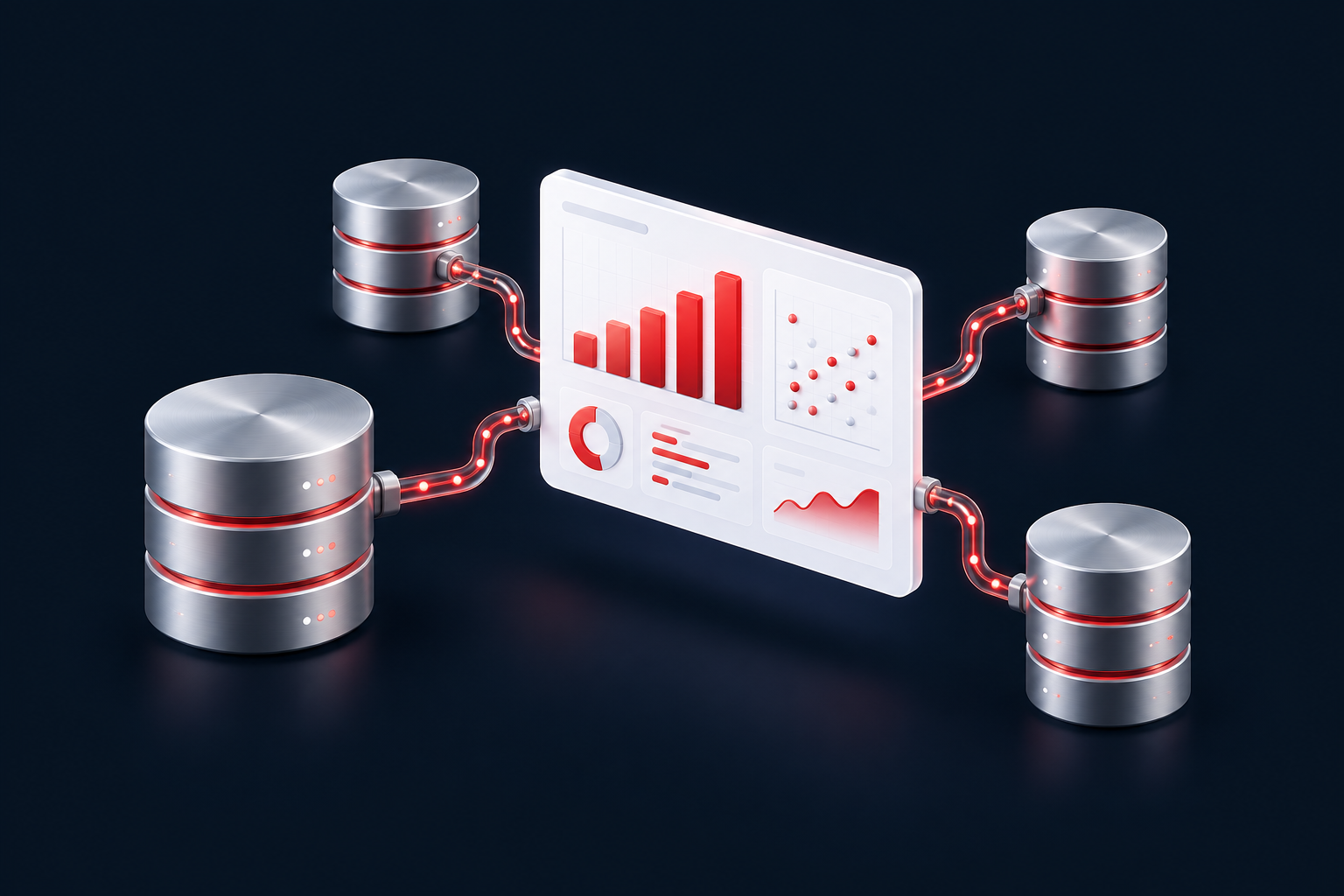
Connect engineering decisions to the people, applications, and reports that depend on your data.
Identify the decisions your data must support, assess source limitations, and establish a prioritized delivery roadmap.
Design storage and analytical models around access patterns, ownership, retention needs, and expected growth.
Connect source systems with repeatable ingestion and transformation workflows, including validation, retries, and traceability.
Process events where timely information matters, with explicit freshness targets and a plan for delayed or duplicate records.
Define dataset owners, access boundaries, quality rules, and lifecycle practices that your team can maintain.
Prepare discoverable, well-structured datasets for AI evaluation and development, with attention to provenance and appropriate access.
Keep analytical needs, engineering constraints, and operating responsibilities aligned throughout delivery.
Make checks and exceptions visible so downstream teams understand the information they are using.
Work with your engineers and analysts to document decisions and maintain a practical handover.
Choose a foundation based on workload needs and existing systems rather than adding unnecessary complexity.
Review processing, storage, and retention choices alongside performance and reliability requirements.
Share your sources, current platform, and the questions your reporting cannot answer. We’ll discuss the assessment and engineering work needed to move forward.
Shared milestones keep business stakeholders and engineering teams aligned throughout delivery.
Inventory datasets, dependencies, current reporting gaps, and the business questions that matter most.
Define models, storage, access rules, and how information will move through the platform.
Implement ingestion and transformation with validation, failure handling, and repeatable deployment.
Integrate the agreed applications, reporting tools, and analytical workflows with clear data contracts.
Check quality, freshness, query performance, and recovery behavior against agreed acceptance criteria.
Document monitoring, ownership, and support routines, then review changes as sources and usage evolve.
Choose the balance of collaboration, responsibility, and scope your project needs.
Bring targeted engineering or architecture expertise into your current team and delivery process.
For a team with a defined roadmap and technical ownership.
Discuss this approachBring architecture, pipeline development, and analytical delivery into a shared plan.
For modernization work spanning several releases.
Discuss this approachAgree on sources, deliverables, dependencies, and acceptance criteria before implementation.
For a bounded assessment, integration, or migration.
Discuss this approachNamed dataset owners
A roadmap tied to business needs
Visible validation and exceptions
Documented operations and handover
Hire specialists across AI, web, mobile, cloud, data, and enterprise software.
See the application and platform work featured across AsonTech Solutions.
Answers about platforms, pipelines, governance, and delivery.
An engagement can cover architecture, ingestion, transformation, storage, analytics integration, governance, and operational handover. The scope starts with the decisions and workflows your data needs to support.
Not necessarily. We review your existing tools and limitations before recommending changes. Targeted improvements to pipelines or models may be more appropriate than replacing the whole platform.
A warehouse typically organizes modeled data for analysis and reporting. A lake can retain a wider range of raw and processed data. The right approach depends on how your team stores, manages, and uses information.
We assess available APIs, database access, export mechanisms, and source ownership. Integration planning includes refresh frequency, schema changes, and handling incomplete or duplicate records.
Streaming is useful when a business decision needs timely event data. Batch processing may be simpler and more economical when scheduled updates meet the need. We define freshness requirements before choosing.
We agree on quality rules, validation checks, ownership, and access boundaries. Exceptions should be visible and actionable rather than silently passed into reports or downstream applications.
The estimate depends on source complexity, volume, integrations, migration needs, and operational requirements. Discovery produces a scope and sequence of milestones your team can review.