

Read approved information
Use only the sources and records authorized for the specific task.
Give your teams practical AI tools for the work around care. AsonTech Solutions builds assistants, document workflows, and operational applications with clear boundaries, reviewable outputs, and a plan for measuring what works.
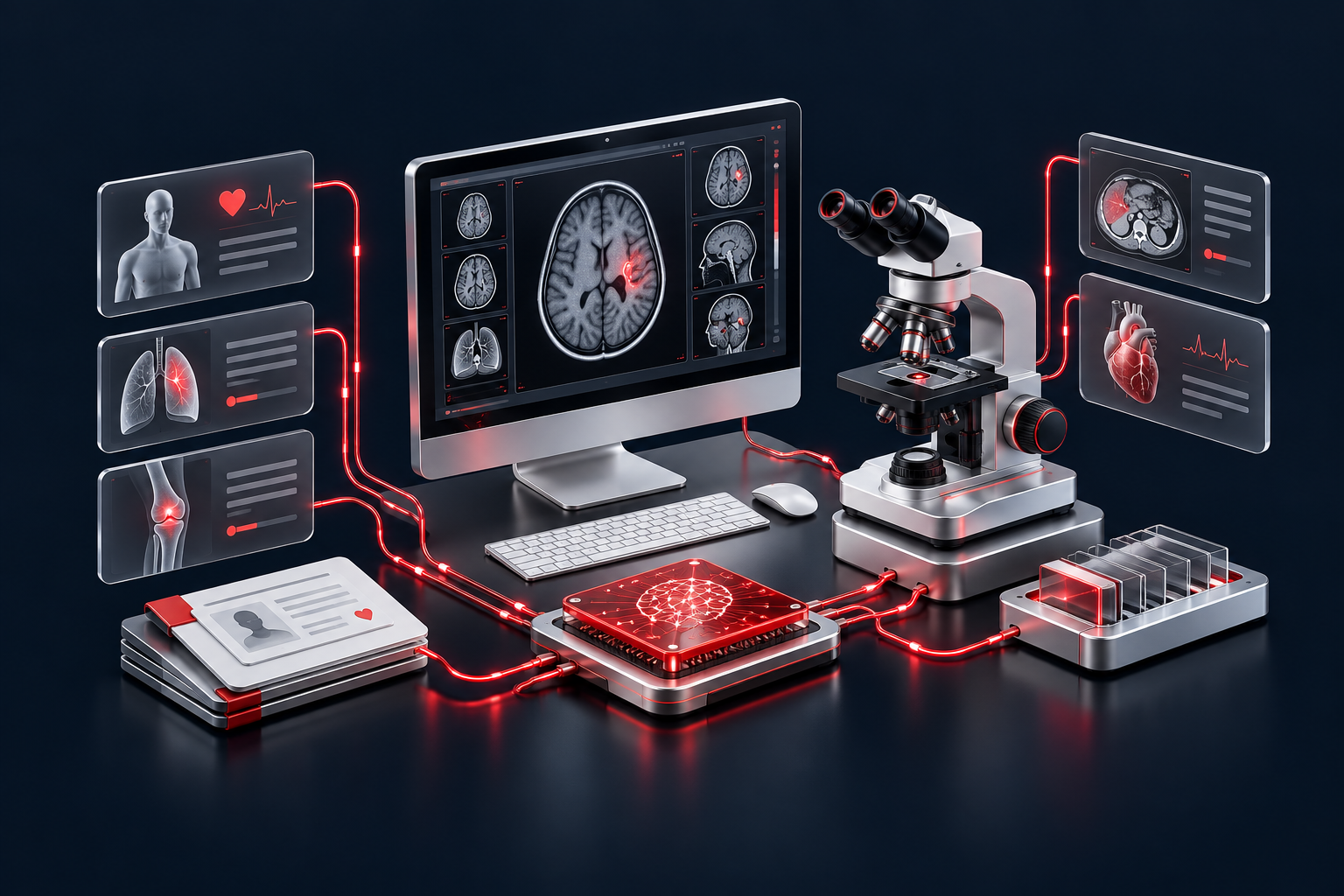
Use only the sources and records authorized for the specific task.
Extract, organize, or draft information within a clearly defined use case.
Let the responsible staff member verify evidence and approve consequential actions.
Track errors, corrections, and usefulness as the workflow moves into daily use.
A useful healthcare AI product starts with a specific problem: reviewing incoming documents, finding a policy, or preparing information for a staff member. We define that job before choosing a model or designing the interface.
Our approach connects product design, engineering, and evaluation so the output fits the real workflow and the person accountable for the next step.
Focus on one recurring task and agree on what a useful result looks like before expanding.
Bring AI development, application design, integration, and quality review into one delivery plan. Your domain experts help shape the requirements and judge the outputs that matter.
Discuss your workflowA coding reviewer, patient service agent, and operations manager need different tools. We design around their responsibilities, source information, and the decisions they are authorized to make.
Discuss your workflowKeep source material accessible beside extracted fields or draft text. Staff can check the evidence, correct the result, and decide whether it is suitable for the next step.
Discuss your workflowDefine the user, intended task, boundaries, and measurable acceptance criteria.
Review availability, permissions, quality, and a representative evaluation sample.
Connect approved sources and create a usable workflow with review and fallback paths.
Test normal, difficult, and unsupported requests with the people responsible for the task.
Launch in stages, review corrections, and re-evaluate when data or models change.
Select the capabilities that fit your users, available data, and review requirements.
Extract agreed fields from referrals, forms, and administrative documents. Flag missing or uncertain information for verification.
Prepare draft summaries from approved records for qualified staff to review, correct, and accept before use.
Surface candidate codes and relevant record excerpts for qualified coding reviewers. Keep final selection and claim approval with the authorized team.
Group recurring issues, highlight missing information, and help staff prioritize accounts for investigation.
Answer approved administrative questions, guide navigation, and route clinical questions or unresolved requests to staff.
Help staff find relevant policies and procedures with source references and access boundaries.
Classify incoming requests and prepare suggested next steps within rules approved by your operations team.
Explore workflow patterns and draft explanations grounded in agreed data definitions and reviewable evidence.
Identify the documents, questions, and handoffs that consume time, then assess where AI assistance can help.
Identify a tractable problem and check whether the available data and systems can support a useful pilot.
Inspect source quality, access constraints, and coverage before relying on them in a user-facing workflow.
Compare deployment options, model services, operating cost, and maintenance responsibilities against your requirements.
Test whether the proposed assistance is useful, reliable enough for its role, and worth operating at your expected volume.
Use representative task examples and agreed review criteria rather than a generic accuracy promise.
How often does the result meet the task-specific acceptance criteria?
How much checking and correction does staff need to complete?
Does the system recognize when it cannot provide a usable result?
What are the latency, model usage, and review costs at expected volume?
Decide what information the use case needs, who may access it, and where it may be processed. We review those decisions with your stakeholders before connecting live organizational data.
Define who reviews outputs, approves changes, and owns the system after launch.
We work with your designated legal, security, clinical, and operational stakeholders to capture requirements for the intended use. The plan includes review responsibilities, evaluation evidence, and release criteria.
Clinical decision features need their own assessment. Administrative assistance should have clear boundaries and a route to a qualified person when a request falls outside its scope.
Show the original information, suggested output, and controls needed to accept, correct, or reject it.
Route uncertain, unsupported, or failed requests into a visible queue with an assigned owner.
Capture corrections and recurring problems for evaluation before changing the live workflow.
Assess supported interfaces, source permissions, record matching, and failure handling before committing to an integration.
Retrieve from approved material and let users inspect supporting references rather than treating fluent text as evidence.
Give each automated step explicit permissions, preconditions, and a clear approval path where needed.
Keep the original input, AI output, supporting evidence, and reviewer correction together.
Track performance on agreed task examples and review new failure patterns after release.
Provide a useful next step when information is missing, a request is unsupported, or a system is unavailable.
Version key configurations and compare results before promoting changes into the live workflow.
The agreed screens, review controls, and supported integrations.
Task examples, acceptance criteria, results, and known limitations.
Access responsibilities, monitoring, escalation, and change review.
Documentation and training around how your team will use and maintain the workflow.
Answers about use cases, data, review, and delivery.
Start with a repeatable task, accessible authorized data, and a clear way to judge the result. Document intake or internal knowledge retrieval may be suitable candidates, depending on your workflow. Discovery compares expected value with integration and review effort.
We assess your vendor’s supported interfaces, access permissions, and available data. Integration scope is confirmed after that review, including how failures and mismatched records will be handled.
The use cases described here support staff with extraction, drafts, retrieval, and prioritization. Qualified professionals retain responsibility for clinical and coding decisions. Any proposed clinical decision feature requires a separate intended-use and validation assessment.
We design around approved sources, reviewable evidence, representative evaluation examples, and explicit fallback behavior. Human review remains part of the workflow where an incorrect output could have a consequential effect.
Data use must be agreed during solution design. We review model-provider terms, retention settings, deployment choices, and your approved processing arrangements before connecting organizational data.
We define applicable requirements with your designated stakeholders and evaluate the agreed use case on representative data. Compliance and performance depend on the complete system, intended use, configuration, and operating processes; they are not established by choosing a model alone.
The scope depends on the workflow, data preparation, integrations, review requirements, and deployment environment. A focused discovery stage helps define the pilot, acceptance criteria, and ongoing operating costs.
We review the agreed results with your team and decide whether to refine, expand, or stop the use case. A production plan covers rollout, training, monitoring, ownership, and how future changes will be evaluated.